10 December 2024
Business Surfing Amid Changes
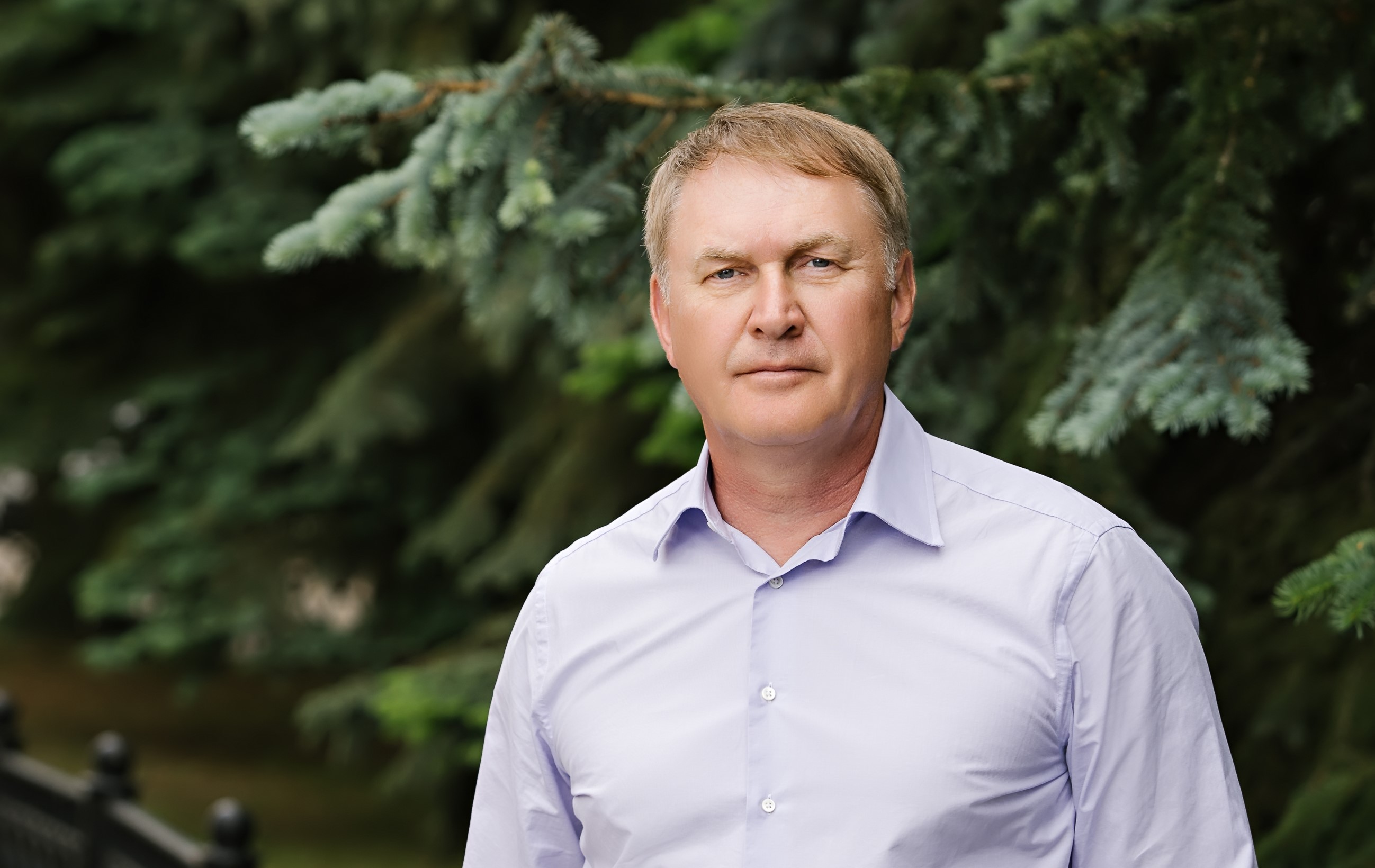
Interview with Sergei Pondar, General Director of Volga JSC, about company's investment project implementations and industry consolidation
Business surfing the wave of change
Interview with Sergey Pondar, CEO of Volga JSC, on the implementation of the company's investment projects and industry consolidation
In recent years, the pulp and paper industry has faced serious challenges: pandemic, sanctions, global economic and political shifts. Companies in the industry have had to not only adapt to these conditions, but also look for new ways of development. This is what Sergey Pondar, General Director of Volga, one of the leaders of the Russian pulp and paper industry, is telling our readers today. Perhaps by reading his interview, many of you will be inspired by the art of ‘business surfing’ the waves of change and learn how to transform crises into drivers of growth. Sergey Pondar will share his thoughts on how the changes of 2022 have affected the industry, what investment projects are moving forward and the importance of unification for success. The interview reveals details of strategic decisions, current investment projects, and assesses the prospects for technological sovereignty in a rapidly changing world.
It's four years since your last interview for PPI Magazine. What's your take on the global changes that have occurred during this time, in terms of their impact on the country as a whole and the pulp and paper industry (PPI) in particular?
Yes, indeed, a considerable amount of time has elapsed. It is necessary to understand and correctly assess the global changes that have occurred over the past four years, both in terms of their impact on the country and in terms of their impact on the pulp and paper industry. It is very important to identify key factors of this period that determine the industry configuration to date.
There are obvious factors, such as the pandemic, sanctions, and the SMO, and there are those that are prominent only from within the industry. That’s why we would be glad to know your views, which is of great interest both to industry professionals and to related businesses.
Indeed, the pandemic has changed the consumption format, boosting the development of e-commerce and, as a result, respective packaging solutions. During this same period, China finally emerged as a key driver in many areas of our industry related to the consumption of e-commerce packaging. First of all, it concerns corrugated packaging. We noticed this trend in time, practically at the stage of its inception, as well as the trend towards basic weight reduction, due to the fact that GoPro packaging for quick solutions, quick deliveries, quick parcels is becoming increasingly sought-after. With that said, we began to phase in more cost-effective solutions necessary for these areas. Thus, we, not expecting such a boost, actually went in the absolutely right direction, which is now not even a trend, but actually a philosophy. It lies in the fact that more and more companies are focusing on both processing and manufacture of light types of paper, light types of corrugated packaging, leading us to the point where we can say that we have chosen our strategy absolutely correctly.
It is instructive to look at the industry through your eyes and see the possibly previously invisible link between the pandemic and the trend for lightweight types of paper, cardboard, and corrugated cardboard. How have 2022 events changed the pulp and paper industry?
Continuing the story of implications which have brought us to where we are today, it is important to note the changes that occurred in 2022. They touched on three very important industry areas.
- The number one area is markets that have transformed. In fact, there was a complete cross-flow of export-import operations in all countries, absolutely without exception. And this is not just a situation where, as a result of sanctions, European markets have become inaccessible to Russia. The market behaved like communicating vessels, and those who previously supplied to China and other countries where we went to after leaving Europe began to supply to Europe. Europe was not left without paper. And so everyone felt affected by the situation. For us, this is a complete change in strategy in terms of market geography. We, as a company, and the entire industry, as a component, if you ask me, of the entire Russian industry, have restructured ourselves in accordance with the reality.
- The second area to consider today is equipment suppliers. Right after the closure of European markets, major equipment suppliers shut down their operations with the Russian pulp and paper industry as well. Today, it is probably still difficult to assess the entirety of this factor. In terms of global shifts, not enough time has passed for us to assess this. We will certainly cope, but it is important to accept and understand this factor; it requires rethinking our operations with equipment suppliers.
- And another important area, a business component, which also exerts a strong influence over the industry today is logistics. Logistics has also become more specific (it has to be built up for each project, and sometimes even for each piece of equipment), more complex and slower, since logistics flows are still only being rebuilt. Here, once again, too little time has passed for the wave that was raised by these processes to subside.
How do you assess the current state of the industry compared to past crises?
At the moment, in my opinion, there has been a certain balance of forces influencing the industry, which was the case in the 2000s. We have gone through certain political and market waves, squalls, and typhoons. And in the 1990s, through the crises, and in 2008, 2016, there were quite a lot of upheavals. And now it’s time for another global wave. And we are trying not just to stay on top, but to use our best endeavors. It defines the conditions under which we implement our plans today.
It seems that we have come to the most important point of the interview. What you are talking about now is actually turning poisons into medicines. Turning a difficult situation into a driver for Company’s development is, of course, an art. The art of not just balance and holding fast our ground, but development and movement forward. Business surfing on the market waves is a kind of extreme sport for industry leaders. Please tell us what investment projects your Company is implementing in line with today’s market?
The modernization that we discussed with you back in 2020, and which continues today, is the first stage of our long-term strategy. The word "first" is extremely important here, because it will be followed by the second, third and fourth stages. We are already developing next steps, and what we are talking about today is just the beginning. This stage includes three investment projects: reorienting PMM No. 6, recycled pulp line commissioning and launch of a condensing steam turbine. The total investment in these projects makes up a significant amount.
Would you care to amplify each of the projects?
- I'll start with the most important thing. This is restoration of PMM No. 6 performance. To launch it, we needed to get equipment and perform a large package of work that is necessary to restore performance and bring it up to new standards. PMM No. 6 was down a great while ago, so it was necessary to check out certain parts of the machine. At the moment, PMM No. 6 is at the commissioning stage.
- The second project is the recycled pulp line that will produce raw materials for PMM No. 6. We made use of the infrastructure at hand, which allowed us to significantly reduce costs. At the moment the line is already running.
- The third project is focused on the increase of energy generation, namely electrical power generation. When we discussed this issue earlier in 2020, a decision was made to choose the investment project stream. We decided to increase capacity by building a condensing steam turbine, after all. It is important to emphasize that this is a completely Russian product: from materials to automation, electronics and control panel – everything is manufactured by Kaluga Turbine Plant PJSC. The turbine was successfully delivered, mounted with associated equipment, a permit was obtained from regulatory authorities for hooking up to the utility line, and has already been put into operation.
Do the above factors, which are generally considered to negative ones, have any impact on the continued implementation of your Company's plans?
Definitely, they had a certain impact on implementation of our projects, especially in terms of deadlines. However, I want to emphasize that we were able to get all necessary equipment to restore performance of our machine.
In 2020, you spoke about scheduled expansion of the logging area. Has the area of the leased plots changed since then?
The logging area expansion is our related project, but it is considered as a priority. We have already gone through two waves of expansion so far. We call them priority investment projects number one and number two. Volga Company was the first to receive such status and remains the only one in the Nizhny Novgorod region that implements such projects. We successfully completed the first project in 2021. The second project was signed in 2023 in cooperation with regional authorities, the Ministry of Industry, and Federal Forestry Agency. We are completing its implementation this year. All lease agreements have been signed, we have received a new lease and have begun business operations on new sites since August. Accordingly, we provide infrastructure support for our major performance improvement investment project.
What do you expect from 2025?
Next year will be the year of projected capacity attainment, a time of stabilization and determining the next step in production modernization for us. This will be a key moment when we can understand what stage of modernization awaits us in the future. It is important to note that for the first stage, a significant factor was the scheduled and already implemented significant increase in the number of jobs, especially for the logging unit (LU). This project is fully implemented and is already 100% operational. This process was challenging given the current labor situation in the country. However, we were able to solve this problem for the most part. Now Volga is approaching the new year with all-new capacities. I really hope that all erection work will be completed by the New Year. This will be the year of assimilation of the investments that we have made over the past 3-4 years, as well as shaping the next modernization stage.
Let's numerate the entire first stage of your investment project.
- Introduction of reoriented PMM No. 6 with a production capacity of 140 thousand tons per year actually means a 50% increase in the total capacity of the Company. We think that after full use of machine capacity and additional raw materials manufactured by the recycled pulp line, we will be able to reach a level of about 500 thousand tons per year.
- As for the steam turbine, it generates 27 megawatts, but it also allows for additional loading of existing capacities, which ultimately gives us an increase of up to 50 megawatts. Although we do not need all this power at this stage, we have decided to establish an energy reserve to support next development stages.
- We increased lease of forest lands to 300 thousand cubic meters, which allowed us to reach the level of 550-600 thousand cubic meters.
- If we talk about creating jobs, then after modernization their number will increase to 300. Under current conditions of labor shortage, we are not reducing existing capacities, but are moving towards increasing productivity through investment and increasing capacity per employee. However, all companies are faced with labor shortages. This is due to generational change, fall in unemployment in recent years and migration processes. These factors generate pressure on the labor market, and we have to resort to mechanisms such as outstaffing and outsourcing to meet personnel needs.
I’d like to talk to you about such a global issue for our country as technological sovereignty as well. This issue is now on the table at all levels, from the government to business. Do you think that technological sovereignty of Russian pulp and paper industry is a real prospect? Is it really possible to achieve this under current conditions?
Certain steps are already being taken in this regard. Let's be fair-minded: today the industry is in a fairly stable situation, as is often noted at various professional forums. This is due to the fact that over the past 15–20 years we have modernized the entire industry on a large scale. Many companies have built fresh capacities, although not always at the level of greenfield projects, but nevertheless, new machines have been installed. The main achievement is the renewal of those capacities that were put into operation back in Soviet times, in the 1960s and 1970s, when the current configuration of the industry was shaped.
From the early 2000s until recently, development on modern lines was active, mainly due to European equipment suppliers. Therefore, today we find ourselves in a favorable situation and, despite the sanctions, we continue to develop by inertia. On the other hand, we have a chance to increase our independence from foreign suppliers; this is now called the technological sovereignty. Today, Russian solutions for automation, control, energy and electronics are emerging, and this is truly important progress. Although some of electrical equipment has been of Western manufacture until now, we see more and more domestic developments. It is a positive but slow process, since such major changes take time. Like any investment that takes 3-5 years to build, this transition will also take a significant amount of time, but the pace has already been set. In particular, we use domestic solutions in electronics, automation and software, which previously were completely dependent on Western supplies. In small steps, of course, but this process is developing, and these small achievements should eventually turn into large-scale ones that will allow the entire industry to believe in Russian developments.
As for equipment, the situation is much more complicated, since this area requires large financial investments and high technologies. However, steps are being taken, albeit slowly. It is important to avoid disconnect between expectations and reality: the industry is relatively small on a national scale, and government support is a necessity to it, so we work collaboratively with the Ministry of Industry and Trade. It is easy to prohibit access to technologies, but it is impossible to replenish them through parallel imports. Therefore, it is extremely important that domestic solutions are now starting to appear. This is a positive aspect, although it is happening slowly, very slowly. Our industry is inertial; it takes 3-5 years to build a machine from the moment the decision is made to the commissioning. The same goes for technological sovereignty – it is a long process. However, this trend has already emerged, and, despite the fact that it is forced, it will ultimately lead to us to greater independence.
How can the industry survive until it reaches full technological sovereignty?
If we talk about the reality of today, we are replacing Europe with China in terms of heavy engineering, wherever possible. But this is a long process as well, as with Europe, when it took us quite a long time to establish relations and implement efficient projects.
What would you like to wish your colleagues in the industry?
My main wish is to unite. In the existing complex situation, we have already taken many steps, and one of them was active mutual exchange of information and site visits. Colleagues from other companies began to visit us more often, and we began to communicate more openly and share experiences. It evokes sensation that we are finally starting to look like a uniform industry. I recall the words of Oleg Evgenievich Bolshakov, Deputy Minister of Industry and Trade, who said that the industry often lacks a unified voice and interests. This is an important point, and one I have thought about a lot. I have always been a supporter of maximum openness. Indeed, we need to be careful in commercial matters and technological innovations, but sharing best practices in the current environment is the key to our development. For instance, exchanging information about solutions that operate with a particular manufacturer, what is the best place to repair equipment – this is important information needed by the industry. Surely, each company advances independently, but the world is round, and unification will allow us to become stronger, more perfect and grow faster. By uniting, we will be able to stand on our own two feet, as an industry and as individual enterprises. There are many examples, but the main idea is that by resting on several supports we will be more stable and stronger. We have already met several times, discussed imports phase-out, creation of databases, and I want to thank my colleagues who respond to requests. For instance, we invite you to see how the recycled pulp line works. I am always open to such visits and encourage my colleagues to do the same – there are no secrets here. I am confident that the future of our industry will be more sustainable if we continue to work in that manner. Openness to cooperation is the key to our success.


